Wednesday, May 5, 2010

Nice Quotes from Famous people


Courtesy: Desicolours.com


Tuesday, May 4, 2010

PEARLS OF WISDOM

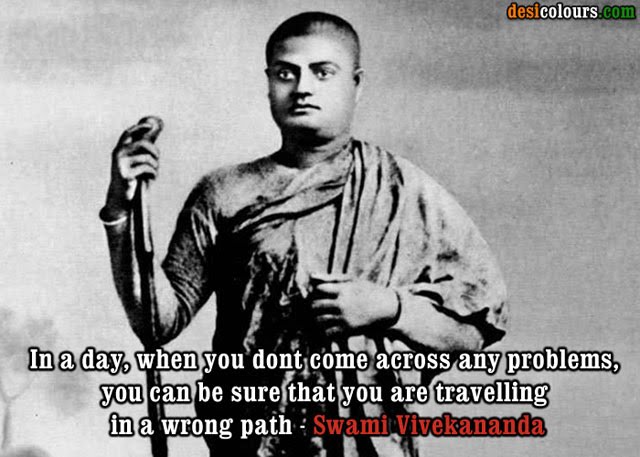
All the power is in you. You can do anything and everything, Believe in that. Swami Vivekanandha.

Be the change you want to see. Mahatma Gandhi

Whosever determination is higher than the other's wins. - Unknown.

Success comes when your desire for success is greater than your fear of failure. - Unknown.

If you want something you never had, then do something you never did. - Unknown.

Work hard to get what you like, or you will be forced to like what you get. - Unknown.

Wednesday, April 28, 2010

Ratan Tata and the Flat Tyre

One of Mr. Ratan N Tata's first assignments was the stewardship of the ailing electronics company in the Tata portfolio - Nelco.

Story goes that a team of senior managers from Nelco was driving to Nasik along with RNT. Halfway into the journey, the car had a flat tyre, and as the driver pulled up, the occupants - including Mr. Tata - got off for a comfort break, leaving the driver to replace the tyre.

Some of the managers welcomed the forced break, as it allowed them a much-needed chance to light up a cigarette. Some used the opportunity to stretch, and smile, and share a joke. And then, one of them suddenly noticed that Mr. Tata was not to be seen, and wondered aloud where Ratan Tata might have vanished.

· Was he behind some bush?
· Had he wandered off inside the roadside dhaba for a quick cup of tea?
· Or was he mingling with some passer-bys, listening to their stories?

None of these, in fact while his colleagues were taking a break, Ratan Tata was busy helping the driver change tyres. Sleeves rolled up, tie swatted away over the shoulder, the hands expertly working the jack and the spanner, bouncing the spare tyre to check if the tyre pressure was ok. Droplets of sweat on the brow, and a smile on the face.

In that moment, the managers accompanying Ratan Tata got a master class in leadership they haven't forgotten.

And that's a moment that the driver of that car probably hasn't forgotten either.

Questions to ask:
When was the last time I rolled up my sleeves to do a task much below my hierarchy?
Do I wait for the big opportunity to showcase my leadership?
Is that big opportunity ever going to come?
Am I trying to manage upwards so much that I lost the feel of the field?


Ideas for action:

· Humility is the essence of success. Be humble and even teach your children to be so.
· To reach the top and remain there, always start from the bottom, else your days at the top will not last long..
· Practice leadership in small things instead of waiting for the big crisis or a major product launch.
· Seek to find opportunities to lead in everyday moments.
· Build your leadership skills one baby step at a time.
· Good day!!
"It is not how much you do, but how much love you put in the doing that matters."

SIX Bad Qualities to be shunned if we have to prosper


षड् दोषा: पुरूषेणेह हातव्या भूतिमिच्छता

निद्रा तन्द्रा भयं क्रोध: आलस्यं दीर्घसूत्रता

chanakya

shad doshaah purusheneha haatavyah bhoothimichchathaa
nidhraa tandra bhayam krodah aalasyam deergahsootrataa


Six bad qualities in a person should be nipped in the bud if he were to prosper.

They are (1) tendency to sleep long, (2) lethargy (3) unreasonable fear (4) blind anger (5) laziness and (6) tendency to procrastinate.

1. Tendency to sleep Long:

For some people sleep is the ultimate pleasure. No doubt, a healthy snooze is necessary to recoup the body and the psyche from the effects of hard work. But one has to remember that this life is too short. From sleep we have come into the world, and we are proceeding to the eternal sleep ultimately. If we have to do something worthwhile, why should we emulated Kumbhakarna or Rip Van Winkle?

2. Lethargy:

One's lethargy, that is tendency to keep awake without doing anything is another curious dampener to progress. One should understand that the food one takes will digest properly only if one is in motion. There is hardly any difference between a non-performer and a dead fellow. Krishna said in Gita that he had nothing to achieve in life and nothing more to perform, and still he is always engaged in work.

3. Unreasonable Fear:

For some people unfounded fear and anxiety, would block all their welfare. The worst things that can overtake a person like death, misfortune, diseases etc., are not fully preventable. So what is the use of fearing the uncertainty?

4. Blind Anger:

The next enemy is excessive anger. For the strong fellow anger comes out of arrogance. For the weak, anger is the result of lack of ability to do anything. But in anger a man loses his sense of balance and this can lead to his doom.

5. Laziness:

One another slow poison inherent in human beings is laziness. Fully knowing that there are many things to be done before the goal is achieved, if one simply keeps quiet expecting that the rainbow will appear from nothingness, he is pathetically lost.

6. Tendency to Procastinate:

The twin brother of laziness is procrastination. The tendency to postpone every action till the last minute is very dangerous. One does not know what is going to happen in the next moment. So why should one keep aside the things to be done expecting to take up the work at the last moment? May be procrastination is the worst and deadliest enemy one has to avoid if there is to be some meaning and content to his life.
__._,_.___

Tuesday, April 27, 2010

WINNERS VERSUS LOSERS


¨ The Winner is always part of the answer;
The Loser is always part of the problem.

¨ The Winner always has a program;
The Loser always has an excuse.

¨ The Winner says, "Let me do it for you";
The Loser says, "That is not my job."

¨ The Winner sees an answer for every problem;
The Loser sees a problem for every answer.

¨ The Winner says, "It may be difficult but it is possible";
The Loser says, "It may be possible but it is too difficult."

¨ When a Winner makes a mistake, he says, "I was wrong";
When a Loser makes a mistake, he says, "It wasn't my fault."

¨ A Winner makes commitments;
A Loser makes promises.

¨ Winners have dreams;
Losers have schemes.

¨ Winners say, "I must do something";
Losers say, "Something must be done."

¨ Winners are a part of the team;
Losers are apart from the team.

¨ Winners see the gain;
Losers see the pain.

¨ Winners see possibilities;
Losers see problems.

¨ Winners believe in win-win;
Losers believe for them to win someone has to lose.

Winners see the potential;
Losers see the past.


¨ Winners are like a thermostat;
Losers are like thermometers.

¨ Winners choose what they say;
Losers say what they choose.

¨ Winners use hard arguments but soft words;
Losers use soft arguments but hard words.

¨ Winners stand firm on values but compromise on petty things;
Losers stand firm on petty things but compromise on values.

¨ Winners follow the philosophy of empathy: "Don't do to others what you would not want them to do to you";
Losers follow the philosophy, "Do it to others before they do it to you."

¨ Winners make it happen;
Losers let it happen.

¨ Winners plan and prepare to win.
Losers plan…. Plan…and sometimes don’t plan
The key word is preparation.

A Beautiful Belief


A Beautiful Belief:


If God answers ur prayer,
He’s increasing your faith

If God delays ur prayer,
He’s increasing your patience

If God doesn’t answer ur prayer,
He knows you can handle


- Anonymous

Don't Quit

Don’t Quit

A man once decided to quit...quit his job, his relationship, hisspirituality. …… He wanted to quit living.He went to the woods to clear his head and have one last talk with GOD."Can you give me one good reason not to quit?" he asked.

"Do you see the fern and the bamboo?" God asked,"When I planted the fern and the bamboo seeds, I took very good care of them. I gave them light. I gave them water. The fern quickly grew; its brilliant green covered the floor. Yet nothing came from the bambooseed. But I did not quit on the bamboo. The second year the Fern grew more vibrant and plentiful. And yet, nothing from the bamboo seed. But I did not quit on the bamboo." GOD said. "In year three there was still nothing from the bamboo seed. But I just would not quit."Then finally a tiny sprout emerged from the earth. Compared to the fern it was seemingly small and insignificant. .. But just 6 months later the bamboo rose to over 100 feet tall. It had spent the 4 years growingroots. Those roots made it strong and gave it what it needed to survive. I would not give any of my creations a challenge it could not handle.""Did you know, that all this time you have been struggling; you haveactually been growing roots? I did not quit on the bamboo. I will neverquit on you.""Don't compare yourself to others." GOD said. "The bamboo had adifferent purpose than the fern. Yet they both make the forestbeautiful.""Your time will come", GOD said to me. "You will rise high"

Think before you decide to quit……..

I Asked God....

I Very nice poem that I read daily in the morning before I start my work.
I asked GOD


I asked for Strength.........And God gave me Difficulties to make me strong.

I asked for Wisdom.........And God gave me Problems to solve.

I asked for Prosperity.........And God gave me Brain and Brawn to work.

I asked for Courage.........And God gave me Danger to overcome.

I asked for Love.........And God gave me Troubled people to help.

I asked for Favors.........And God gave me Opportunities.

I received nothing I wanted ........
I received everything I needed!

Wednesday, April 21, 2010

Young Billionair at 27 - Sabeer Bhatia

Born: 1969Success Story of Young Billionaire - Co-founder of Hotmail -Mr. Sabeer BhatiaSabeer Bhatia is one of the poster boys of Indian success story at Silicon Valley. He is better known as the man who co-founded Hotmail. He later sold it to Microsoft for $400 million and today Hotmail is the world's largest e-mail provider, with over 50 million registered users.Sabeer Bhatia was born in 1969 at Chandigarh. He comes from a humble background. His father was an army officer and his mother worked with the Central Bank of India. Sabeer Bhatia had his earlier schooling at Bishop Cotton's School in Pune and later on at St Joseph's College in Bangalore. After passing out from school he joined the Birla Institute of Technology (BITS) at Pilani. At Pilani, he qualified to try for a transfer scholarship at Cal Tech, considered to be the world's most competitive scholarship. Sabeer Bhatia was the only applicant in the entire world in 1988 to get a passing score of 62.In 1988 Sabeer Bhatia came to America and completed his B.Sc. with honours and earned a master's degree in electrical engineering from Stanford University. In 1992, while working on his Ph.D., Sabeer dropped out and joined Apple Computers as a systems integrator. He worked for Apple Computer for a year. Then he worked for another startup, Firepower Systems Inc. In 1995, Sabir Bhatia co-founded Hotmail Corporation along with Jack Smith, a colleague at Apple Computers. They launched pioneering web-based e-mail service Hotmail. At the end of 1997, he sold Hotmail to Microsoft for $400 million. Sabeer Bhatia t worked for Microsoft for a year until March of 1999, and then in the middle of 1999 he founded Arzoo.comHow did the Indian-born then 27-year-old engineer pull it off? All with a coolly executed mix of brilliant idea, Zen-like negotiations, and sly approach to venture capitalists that would make Machiavelli green with envy.I think you have some gut instincts and you have to go on those," says Bhatia. "And you have to give it a shot ... to an entrepreneur it's like a gamble, but you've got to take that chance." Bhatia crafted the strategy of pitching a decoy idea to venture capitalists in order to see which ones he could trust his true idea with. His real idea turned out to be Hotmail, which offered free e-mail accounts that could be accessed over the Web.
"I was introduced to a number of people who pretended to be venture capitalists, but were in fact, people who had little money or just wanted the idea," explains Bhatia. "I was skeptical and I was scared. I truly believed it was going to be very powerful."
The strategy was not only gutsy, it paid off handsomely. Hotmail added users at a record pace after its kickoff on July 4, 1996, which attracted a lengthy courtship from Bill Gates & Co. Bhatia's stubborn negotiations shocked the Microsoft officials and frightened his own partners, who worried the deal would blow up in his face.
It was the software giant that buckled, however, and it purchased Hotmail for a then mind-boggling $400 million. The humble engineer from Bangalore became an instant Internet player.
Bhatia's mild-mannered appearance may lie in the grounded roots of his upbringing in India. Yet, that doesn't fully explain his innate yen for navigating the business' oft-murky waters.
"You have to be able to look into your adversary's eyes and try to figure out how much does he want this, and can I play on his weaknesses? ... And that's exactly what I did."Sabeer Bhatia has won several honors and awards. These include: "Entrepreneur of the Year," award by the venture capital firm Draper Fisher Jurvetson (1997); and "TR100" award, presented by MIT to 100 young innovators who are expected to have the greatest impact on technology in the next few years. He was named by TIME as one of the "People to Watch" in International Business (2002)

Tuesday, April 20, 2010

The "Don't Quit" Poem


When things go wrong, as they sometimes will, When the road you're trudging seems all uphill, When the funds are low and the debts are high, And you want to smile, but you have to sigh,
When care is pressing you down a bit, Rest, if you must, but don't you quit.
Life is queer with its twists and turns, As every one of us sometimes learns, And many a failure turns about, When he might have won had he stuck it out; Don't give up though the pace seems slow-- You may succeed with another blow.

Often the goal is nearer than, It seems to a faint and faltering man, Often the struggler has given up, When he might have captured the victor's cup, And he learned too late when the night slipped down, How close he was to the golden crown.

Success is failure turned inside out-- The silver tint of the clouds of doubt, And you never can tell how close you are, It may be near when it seems so far, So stick to the fight when you're hardest hit-- It's when things seem worst that you must not quit.
- Author unknown

You Can If You Think You Can!


If you think you are beaten, you are,If you think you dare not, you don't.If you like to win, but you think you can't,It is almost certain you won't.
If you think you'll lose, you're lost,For out in the world we find,Success begins with a fellow's will.It's all in the state of mind.
If you think you are outclassed, you are,You've got to think high to rise,You've got to be sure of yourself beforeYou can ever win a prize.
Life's battles don't always goTo the stronger or faster man.But soon or late the man who wins,Is the man who thinks he can.
~ C. W. Longenecker ~

Friday, October 31, 2008

The Last and Final wishes of Alexander the Great - Part I

This is a very nice story that people need to keep in mind. It has touched my heart and I feel it will definitly touch yours as well. This story has definitely thrown a new dimension towards my thought about life. How is that.......We will discuss at the end.

As every one knows Alexander the Great had conquered almost the whole world by the time he was 32. He was unconquered and undefeated, making him one of the most successful kings in the world history. Unfortunately on his way back home he developed illness, which his physicians claimed, was uncurable. Alexander knew his death was near and he would die soon. Yet he pleaded with his doctors to make him fit enough to reach his homeland.

He was not afraid of death, but.... he wanted to see his mother.. before his death. Alas, the doctors were helpless. Alexander was ready to trade all the kingdoms, wealth and glory that he had amassed during his lifetime for the last few moments he would get to see his home land and mother. Unfortunately, they were in vain.

This was the moment when Alexander realized that all his conquest, wealth and glory wouldn't be of any help when he was to face death. They had no meaning to him any more. They were useless. He realized that death will soon arrive and it was impossible to go back home.So, the mighty conqueror lay prostrate and pale, helplessly waiting to breathe his last.

He called his Commander and said, "I will depart from this world soon, I have three wishes, please carry them out without fail." With tears rolling down their cheeks, the Commander agreed to abide by his king's last wishes.

“My first desire is that," said Alexander, “My physicians alone carry my coffin."

“Secondly, I desire that when my coffin is being carried to the grave, the path leading to the graveyard be strewn with gold, silver and precious stones which amassed during my conquest.

"My third and last wish is that both my hands be kept dangling out of my coffin."

The people who had gathered there wondered at the king's strange wishes. But no one dared to bring the question to their lips. Alexander's favorite Commander kissed his hand and pressed them to his heart. “O king, we assure you that your wishes will all be fulfilled. But tell us why do you make such strange wishes?"
At this, Alexander took a deep breath, smiled and said: “I would like the world to know of the three lessons I have just learnt.

First, I wanted my physicians to carry my coffin because people should realize that no doctor on earth can really cure any body. They are powerless and cannot save a person from the clutches of death. So let not people take life for granted. People should learn to treasure their lives.

Through the second wish of strewing riches on the way to the graveyard, I want to tell People that not even a fraction of gold that I had collected for this long period is going to come with me. I spent all my life earning riches but cannot take anything with me. Let people realize that it is a sheer waste of time to chase wealth. I want people to learn from my mistake.
And about my third wish of having my hands dangling out of the coffin, I wish people to know that I came with empty hands into this world and I go with empty hands out of this world."I can't even take my body along with me on this journey of death.

With these words, the king closed his eyes and soon breathed his last. . .
The moral from this story.... we will see in the next post

Tuesday, October 14, 2008

Inventions by accidents - Micro Oven

History of the Microwave Oven

Like many of today's great inventions, the microwave oven was a by-product of another technology. It was during a radar-related research project around 1946 that Dr. Percy Spencer, a self-taught engineer with the Raytheon Corporation, noticed something very unusual. He was testing a new vacuum tube called a magnetron when he discovered that the candy bar in his pocket had melted. This intrigued Dr. Spencer, so he tried another experiment. This time he placed some popcorn kernels near the tube and, perhaps standing a little farther away, he watched with an inventive sparkle in his eye as the popcorn sputtered, cracked and popped all over his lab.

The next morning, Scientist Spencer decided to put the magnetron tube near an egg. Spencer was joined by a curious colleague, and they both watched as the egg began to tremor and quake. The rapid temperature rise within the egg was causing tremendous internal pressure. Evidently the curious colleague moved in for a closer look just as the egg exploded and splattered hot yolk all over his amazed face. The face of Spencer lit up with a logical scientific conclusion: the melted candy bar, the popcorn, and now the exploding egg, were all attributable to exposure to low-density microwave energy. Thus, if an egg can be cooked that quickly, why not other foods? Experimentation began...

Dr. Spencer fashioned a metal box with an opening into which he fed microwave power. The energy entering the box was unable to escape, thereby creating a higher density electromagnetic field. When food was placed in the box and microwave energy fed in, the temperature of the food rose very rapidly. Dr. Spencer had invented what was to revolutionize cooking, and form the basis of a multimillion dollar industry, the microwave oven.

source: http://www.gallawa.com

Thursday, October 9, 2008

Story of Xerox- Photocopier

Just imagine, having to copy everything by hand. You'd get writer's cramp within five minutes! Well thanks to this guy, we don't have to go through all that.

A man named Chester Carlson worked in a patent office. That's a place where inventors go to get a kind of a license to say that no one can copy their inventions. Anyway, he was always being bothered with people needing copies of patent applications. Copying things took a long time back then, and it was sloppy. Mr. Carlson got fed up, I guess.

He started to work on an invention that would copy right at the push of a button. He worked on it right in his own kitchen. Just imagine, eating breakfast each morning, and seeing this big thing that really didn't even work yet! I would just want it out of there, and that's what would make me keep working on it.

Anyway, he kept working and working on it, and it was FINALLY done. It had taken a while, but it was worth it. The pile of wires that had once been sitting uselessly in his kitchen was now all over the world!

I bet you are all very thankful for Chester Carlson and his kitchen now! If they didn't exist, we'd have to wait for hours at a time to just copy our friends assignment or have to copy the whole thing by hand. That would just be a pain in the neck!


Now I know that you are thankful for Mr. Carlson. He was a great help to people who needed copies of things, and to people who were supposed to make the copies. Now, where would we be today if Chester Carlson hadn't taken the time to invent the Xerox machine?

Story of Zippppppppppp

Zippers were invented by an American engineer by the name of Whitcomb Judson way back in 1893. His idea came because he wanted things to be easier. Everyday people did have to button their coats and dresses. So he invented what he called his "clasp locker and un-locker" which today is the "zipper". It was a collection of metal clasps with a metal slider.

Of course this thing was brilliant but at first, his brilliance failed him. The zipper would often come undone, or it wouldn't pull up because it was stuck. Mr. Judson worked at it, making it better and inventing machines to make them. But even that sometimes goofed up and not many people bought it.

Whitcomb Judson did not want his idea to collapse. Another engineer, Gideon Sundback, made some improvements to make it work. In 1908 he joined Mr. Judson's company. He then made a few more changes and in 1913 he had a cup-shaped link that was easier. It then sold thousands!

Story of Levi Jeans

Jeans are really comfy pants, but have you ever heard the story of how they were invented? It's actually pretty interesting. It goes like this...

In 1850, there was a man named Levi Strauss. He came to San Francisco when he was 17 years old for the Gold Rush.

He noticed that all the miners needed tougher pants because of the rough work they were doing. Seeing that he could start a business, he cut up some canvas from a tent. He made pants out of it, and soon, every one wanted a pair.

Levi didn't really like making pants out of canvas because it was too stiff. He started to make pants out of a different fabric. People in Italy started to call the pants "genes". They called them that because the city where the fabric was made was called Genoa.

Levi decided to change the spelling to jeans, and dyed them dark blue so stains wouldn't show up as well.

Today, blue jeans sell better than any other type of pants in America!

Inventions by Accidents...........

Till date have you been thinking that all the gadgets, the different varieties of food and other day to day devices were a product of years research...........you may be wrong........ because many came up when things went wrong and haywire. Check it out................

1. Cheese
Cheese was invented by an old Arabian traveling across the desert. He had a pouch along with him made from a. . . . . . . . SHEEP'S STOMACH!! Anyway, he poured his milk into it and continued on his way. Later, he opened the pouch to find. . .cheese!!!!!!!
How???
Chemicals from the sheep's stomach combined with the heat of the sun and clumped up the milk into cheese.

2. Frisbee
How many people do you know who toss around a pie tin for fun? Well, it might have been a lot if you had lived before Frisbees were invented. College kids used to play catch with pie tins for fun. Why the name? Frisbee Pie Company, of course!

3. Popsicle
A long time ago, a boy named Frank Epperson was sitting on his front porch stirring soda. Suddenly, something distracted him, and he ran away, forgetting his soda. That night, the temperature reached an all-time low. Frank awoke in the morning to the world's favorite
summer snack-the popsicle!

4.Sandwich
Here he is, the high-and-mighty Earl, sitting daintily at his gambling table when-rats-it's lunchtime! What's a poor Earl to do? Give up his gambling or. . .starve? Suddenly, the Earl gets an idea! He orders his servants to simply pile all the food between two pieces of bread. Easy enough to eat while gambling, and a delightful snack, too. But what does he name this invention of his? Why, after himself- John Montagu, 4th Earl of Sandwich!

5. Potato Chips
Potato chips were invented by a chef. But they were not invented as a new food. They were invented because the chef was getting irritated with one of his customers. You see, one of his customers kept on sending back his potatoes, claiming they weren't thin enough or fried long enough. The chef angrily sliced the potatoes paper-thin, fried them for a loooooong time, and sent them to the customer. To his dismay, the customer loved them and asked for more!

6.Coca Cola
A long time ago, a doctor was carefully working on a new headache medicine. He wanted it to taste good, but also to feel good. He finally perfected it and sent it for approval. When the approvers were inspecting it, they realized that the medicine tasted better than it worked. They put in some carbonated water, changed it a little more, and introduced it world-wide as: Coca Cola, a new soft drink!!

Source: Forwarded Mail

Tuesday, October 7, 2008

Story of Charlie Chaplin

Charlie, a native of London, was born in poverty on April 16, 1889 to music hall performers Charles and Hannah Chaplin. As a child he was confined to a bed for weeks due to a serious illness. At night his mother would sit at the window and act out what was going on outside. This was a major reason Chaplin became a comedian. He was a small child when he got his first break by performing in place of his mother, who was suffering from severe mental illness.

He got his start in films when his half-brother Sydney got him a job with the Karno Company in England. He came to the United States and joined Mack Sennet's Keystone Studio. Sennet was famous for his slapstick comedies which invariably ended in chases. Chaplin went on to work for Essenay where some of his best known work was done. Eventually, with Douglas Fairbanks and Mary Pickford he formed United Artists.

Along the way Chaplin did something that made him a famous figure world wide. Charlie Chaplin was considered to be one of the most pivotal stars of the early days of Hollywood. He lived an interesting life both in his films and behind the camera. He is most recognized as an icon of the silent film era, often associated with his popular "Little Tramp" character; the man with the toothbrush mustache, bowler hat, bamboo cane, and a funny walk.

Actually, he invented the Tramp. He went to the costume room at the studio and began combining pieces of clothing until he was wearing a derby hat, vest that was too small, shoes that were too big, a brush-mustache, and was carrying a cane. The costume seemed to produce the character. He remembered the walk of a man from his childhood and copied it. The character became synonymous with Chaplin until 1940 when he did his first sound film. Even though he did a small amount of work without the Tramp costume he will always be remembered for that character.

Because Chaplin began his life in terrible poverty he always connected with the common man, even when he had become a multi-millionare. There was a serious side to his work, a combination of comedy and melodrama known as "pathos". It hadn't occurred to many comedians to pepper their hilarious performances with scenes that would tug at the audience's heart strings. Charlie became the master and such films as The Gold Rush, The Kid, and City Lights are considered to be treasures for just that reason.

He was daring, willing to take chances, and had a knowledge of what the audience wanted. The silent genius was all of those things. Chaplin was not only a great performer on screen, but he directed most of his films (only his earliest films were directed by others). He was a producer and writer. In the days of silent films he wrote the scene as the film was being made. In his later films the opening credits seem to say "...by Charles Chaplin" over and over.

Up until his last few movies, he never shot with a working script. He would start with a story in his mind and constantly retool it, often shooting hours of scenes that wouldn't make the final cut until he was satisfied. He spent his nights during filming, critiquing the rushes with his assistant directors. Consequently compared to the major studio's films, he spent months/years and excessive amounts of money on his productions. He often said though he would not release any of his films until he was 100% satisfied with the result.

There was more. Chaplin proved to be a prolific composer. He could not read a note of music but could play it for those who could write it down. Some of his music has gained widespread recognition, such as "Smile", from Modern Times and "This is my Song" from one of his lesser known films, A Countess from Hong Kong. The most beautiful is "Eternally", the opening theme of Limelight. It became so widely known as one of the great Chaplin compositions that it was played at many of his professional appearances, including his Academy Award acceptance in 1972.

In 1962 Charlie received an honorary degree from Oxford University. In 1972, twenty years after he left the US, Chaplin was invited back to receive a special Academy Award for achievement. This was followed by a knighthood by Queen Elizabeth II. As Sir Charles Chaplin is star was again on the rise!

A Nice story from British Airways

This scene took place on a British Airways flight between Johannesburg, South Africa & London.

A white woman, about 50 years old, was seated next to a black man. Very disturbed by this, she called the air hostess. "You obviously do not see it then?" she asked.

"You placed me next to a black man. I did not agree to sit next to someone from such a repugnant group. Give me an alternative seat."

"Be calm please," the hostess replied. "Almost all the places on this flight are taken. I will go to see if another place is available." The hostess went away & then came back a few minutes later. "Madam, just as I thought, there are no other available seats in Economy Class.

I spoke to the captain & he informed me that there is also no seat in Business Class. All the same, we still have one place in First Class." Before the woman could say anything, the hostess continued. "It is unusual for our company to permit someone from Economy Class to sit in First Class.

However, given the circumstances, the captain feels that it would be scandalous to make someone sit next to someone so disgusting."She turned to the black guy & said, "Therefore, Sir, if you would like to, please collect your hand luggage, a seat awaits you in First Class." At that moment, the other passengers, who'd been shocked by what they had just witnessed, stood up & applauded....

Respect all....

Source: Forwarded Mail

Story of Superman - Chistopher Reeves

Christopher Reeve was born on September 25, 1952, in New York. He studied at Cornell University, while at the same time working as a professional actor. In his final year of Cornell, he and Robin Williams, who became a life-long friend, were selected to study at the Julliard School of Performing Arts.

When it became financially difficult for him to continue his studies, Reeve took a role in the soap opera Love of Life. In 1976, he dropped out of Julliard to take a role in the Broadway play, A Matter of Gravity, starring Katharine Hepburn. Reeve since appeared in many feature films, TV movies and some 150 plays. He also hosted many specials and documentaries. Some of his better-known films include, Somewhere in Time (1980), Deathtrap (1982), The Bostonians (1984), The Remains of the Day (1993), and Above Suspicion (1995).

In addition to his early stage work, Reeve appeared in The Marriage of Figaro in New York, Summer and Smoke with Christine Lahti in Los Angeles, and he toured with Love Letters in several major cities. He also starred in a well-received production of The Aspern Papers in London's West End with Vanessa Redgrave and Dame Wendy Hiller. He liked to spend summers at the Williamstown Theater Festival.

He established himself early as a Juilliard-trained stage actor before portraying Superman/Kal-El/Clark Kent in four films, from 1978 to 1987.

He made three sequels to Superman, and, in an interview he once said that when he asked Sean Connery how to avoid being typecast, Connery answered, "First you have to be good enough that they ask you to play it again and again."

In May, 1995, Reeve was thrown from his horse during a riding event, and, landing on his head, broke the top two vertebrae in his spine. Left paralyzed from the neck down, Reeve became an active advocate for bringing greater public awareness to the needs of those with spinal cord injuries. He and his wife created a fundraising foundation called the Christopher and Dana Reeve Foundation to raise research money and provide grants to local agencies that focus on quality of life for the disabled. He was also an outspoken advocate for the need for stem cell research.

Despite his injury, Reeve continued to work, both as an actor and as a director, winning accolades for his role in a TV production of Alfred Hitchcock's Rear Window, and acclaim for his directorial debut of the HBO-film In the Gloaming. His autobiography, Still Me, was a bestseller, and he won a Grammy for his spoken album, of the same title.

Reeve died of heart failure on October 10, 2004, after being treated for a systemic infection that resulted from a pressure sore, a common affliction for people living with paralysis.

Reeves became a symbol of positive attitude, persistance and courage

source: wikipedia.com, answers.com